On workplace fun, performance, and the serious impact of joy
Steffi Graf trained like everyone else. She had the same drills, the same hours, the same pressure. But in 1988, when she won all four Grand Slam titles and Olympic gold in the same year, researchers asked a different kind of question: what made her different?
The answer wasn't skill. It was joy.
Graf loved the game more than anyone else on the court. She found flow where others found fear. That joy didn't just make her happier — it made her sharper, more fluid, more fearless. Her edge wasn't just discipline — it was delight.
And that edge? It's not exclusive to athletes.
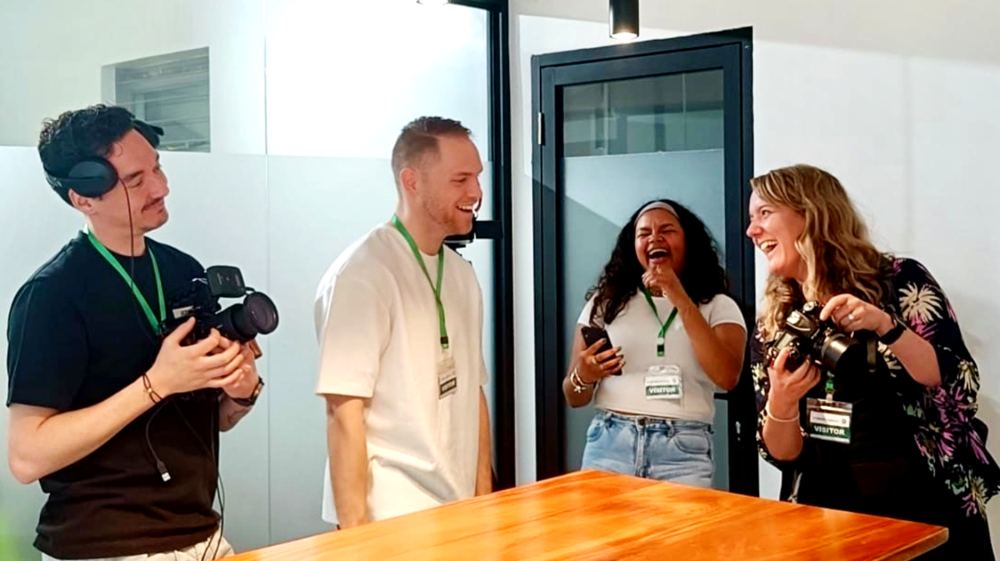
In every high-performing team I've worked with, from marketing agencies, global impact funds, to education innovators, the same pattern shows up. Teams that thrive — really thrive — are the ones that laugh together. The ones that sneak jokes into decks, give each other ridiculous nicknames, and build rituals that would make HR nervous if they weren't so effective.
Fun Isn't Fluffy — It's Fuel
Let's get something straight: fun is not the opposite of focus. It's what powers it.
Workplace fun creates the kind of morale that makes people want to show up — not just physically, but emotionally and mentally. Chan (2010) found that teams with a culture of fun are more satisfied, more committed, and more productive. They feel like they're part of something. And when people feel good, they do good.
Even better? Fun makes you smarter.
Humour and play activate the brain's prefrontal cortex, or the part that governs problem-solving, innovation, and flexibility. So when a team jokes through a problem, they're not avoiding work — they're literally expanding the range of possible solutions (Goleman, 2006).
The Science of Contagious Joy
The buzz isn't isolated. Teams that find joy together radiate it.
Barsade (2002) called this emotional contagion — that subtle but powerful ripple of one person's mood influencing the group. It's the reason one brave “this meeting could've been an email” comment can break the tension and unlock actual progress. That single joke on a sticky note? It lowers stress hormones (Cooper, 2013), sharpens focus, and opens the floor to new ideas.
And here's the kicker: it doesn't just boost creativity — it boosts empathy and retention, too. According to Romero & Cruthirds (2006), humour strengthens communication, builds psychological safety, and makes people more likely to hear and act on feedback.
The Ripple Is Real
And it's not just your team that benefits.
Li et al. (2016) found that celebrating one team member often raises the engagement of the entire team. The positive energy spills over into meetings, memos, and even how the group next door starts formatting their slides.
I've seen it happen: a team known for playing it safe suddenly starts opening meetings with bolder questions. A previously dry voice takes on colour and cadence. All because someone nearby decided that fun wasn't off-brand — it was the culture they were building.
And the spillover doesn't stop at the office door. He et al. (2023) showed that people who engage joyfully at work tend to experience greater harmony at home. Fun is portable. And high performance, it turns out, is deeply relational.
Fun Isn't an Extra — It's a Signal
There's a deeper truth here. One that Google's Project Aristotle made famous: the highest-performing teams aren't the ones with the best résumés or the most rigid planning systems. They're the ones with psychological safety — where people feel safe to speak, experiment, and even fail (Edmondson, 1999).
And fun? That's the canary in the coalmine. It signals safety. Belonging. Freedom to be weird, bold, creative, brilliant. The laughs aren't separate from the work. They are the work — because they make the work possible.
Add to that the team rituals that emerge — running jokes, emoji reactions, accidental mottos — and you get something rare: identity. As Katzenbach & Smith (1993) put it, the strongest teams are those who see themselves as a team, not just people on a shared task.
What I've Learned
I'm nearly finished with my Master's in Management, Culture and Change. If you'd asked me two years ago what the golden bullet of change leadership was, I'd have given you a very serious answer: systems thinking, cultural mapping, stakeholder matrices.
And it's not that those don't matter — they do.
But here's what I've really learned, across all the theory and across all the practice:
Fun is the only golden bullet I've actually seen work. Time and time again.
It's the one thing that transforms compliance into commitment. That turns flat teams into fluent ones. That melts resistance, builds loyalty, and keeps people coming back — not because they have to, but because they want to.
So yes, we laugh. A lot. And if we're doing it right, we keep winning. Just like Steffi.