Scaling impact, the right way.
Integrity does not scale by accident. Every organisation starts with a clear line between what it believes and what it does — growth is what stretches it. We build the operating architecture that holds that line, and we deliver the strategy, research and capability work through it.
Four capabilities. One logic.
Take one, or the whole arc. Either way it is built the same: a named owner, a decision it is meant to inform, and a handover date agreed at the start. We do not lower the rigour for a smaller organisation — we right-size the architecture.
Impact strategy & operating design
Theory of change, governance architecture, decision rights and the operating rhythms that turn evidence into a decision somebody actually owns.
Read more → 02Research, MEL & decision evidence
Mixed-method research, monitoring and evaluation frameworks, and evidence products designed backwards from the decision they are supposed to change.
Read more → 03Learning, training & capability transfer
Curriculum design, facilitation and coaching with an exit date agreed up front. We are measured on what you can do once we stop.
Read more → 04Change management & adoption
Stakeholder mapping, sequencing, resistance and the internal communication that decides whether a new operating model is used or quietly ignored.
Read more →Brand, editorial design, data visualisation, film and digital build are delivered through named partner studios under our direction.
Labelled honestly: what has been realised, and what has been modelled but not yet realised.
Case studies.
Three contexts, three different kinds of proof — one shows the model can be designed for real complexity, one shows it holding up where impact data already drives funding decisions in real time, and one shows it travelling beyond strategy work into published narrative.
CFYE is the harder test: not one organisation, but a live, funding-linked delivery environment across 11 countries. The €134M, seven-year programme — funded by the Netherlands Ministry of Foreign Affairs, delivered by a Palladium / VSO Nederland / Randstad consortium — works to create employment prospects for young people across the Middle East, North Africa, the Sahel & West Africa, and the Horn of Africa. Whitney worked inside CFYE in parallel with the BUSY engagement, and it was there — watching results-based payments and impact dashboards already wired directly into funding decisions — that the Upward Infinity Path model was developed. The full numbers are in CFYE's 2025 Impact Report ↗, published on the programme's own site.
Her role there was strategic, not peripheral: translating monitoring and evaluation data into the programme's core impact narrative and external positioning, rebuilding CFYE's digital and web presence around a clearer content architecture, and directing the design, editorial and technical specialists who produced its impact reporting — while advising CFYE's leadership directly on governance, reputation and consistency between what the programme reported and what it actually did.
The BUSY Group is a 45+ year, multi-country provider operating across Australia, the United Kingdom and New Zealand. Amplify Impact designed its enterprise Impact Strategy and eight-part Impact System: a Theory of Change, measurement framework, data and information architecture, story infrastructure, learning mechanisms and a detailed specification for the governance required to make the system operational. The full five-layer model is not yet implemented. The work completed to date identifies the structural gaps, minimum viable capability and sequence of decisions required to build it responsibly. Modelled across eight value domains — including bid performance, staff retention, compliance cost and decision quality — the potential return is up to 25 times the estimated build cost. This is a forecast, not a realised return. The full detail is set out in BUSY's first Global Impact Report ↗. The value is not in producing another framework. It is in knowing what must be built, funded and governed for the framework to survive contact with the organisation.
Kifiya Financial Technology commissioned Amplify Impact to write and produce a commemorative impact book documenting SAFEE (Sustainable Access to Finance to Enable Entrepreneurship) — its partnership with the Mastercard Foundation to expand inclusive finance across Ethiopia. We wrote the full narrative across eight chapters from original research, interviews and field material, then directed design and production through to a finished, publication-grade book.
The numbers behind the story: 479,329 enterprises financed, 2.9M loans disbursed, 1.35M jobs sustained, improved or created, over 80% of financed enterprises women-led, and $300M in blended-finance portfolios mobilised at a 1:3 private-capital leverage ratio.
We did not adopt a framework. We designed one.
Every canvas on the market was built for a single bottom line. Nothing existed for organisations carrying two. So we built it — and then tested it in live, funding-linked delivery environments rather than in a workshop.
Campaigns land. Reports get filed. Trainings finish. Six months later nothing has moved, because nobody owned the decision the work was meant to inform. That is not a creative failure. It is an operating one — and it is the failure the five layers are designed to expose.
We publish the whole thing, including the parts still being proven. Knowing the five layers is not the same as running them.
The Amplify Impact
Operating Model™
Developed, tested and published by Amplify Impact
- 01 Governance architecture
- 02 Role ownership
- 03 Operating rhythms
- 04 Decision rights
- 05 Enabling infrastructure
We can put a number on the impact function itself.
Most impact work cannot say what it returns. We model the value the operating architecture creates against what it costs to build — and we publish the method rather than assert the result.
Expected return on investment
8:1–25:1Modelled return on build cost for a single client engagement — a forecast, not a realised result. Both bounds are divided by the upper investment bound, which is the deliberately conservative reading. The client is named, and the method, assumptions and full calculation shared, on request.
The most critical friends you will work with.
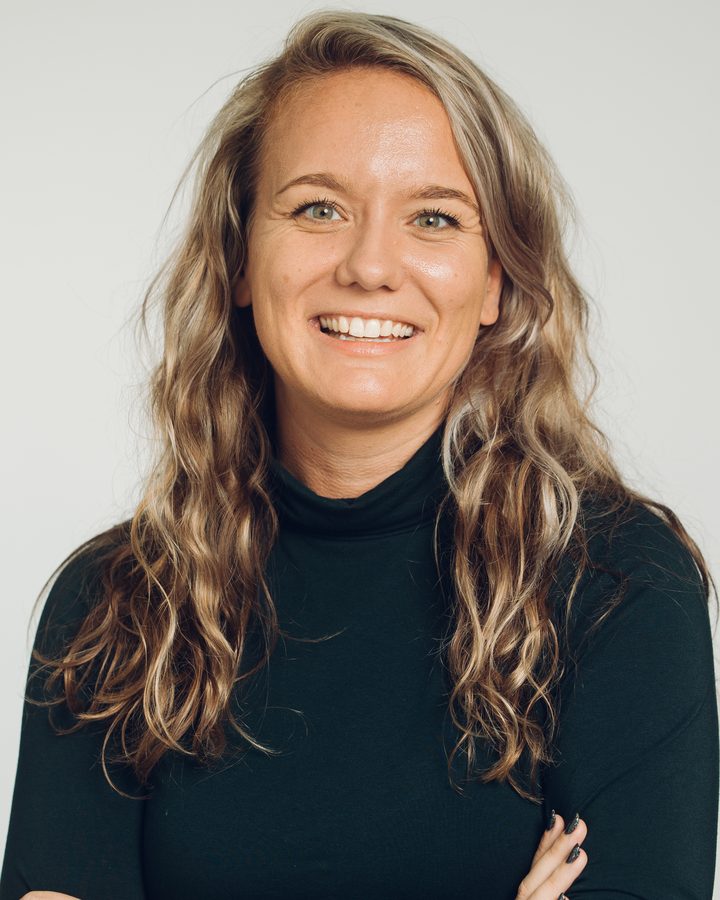
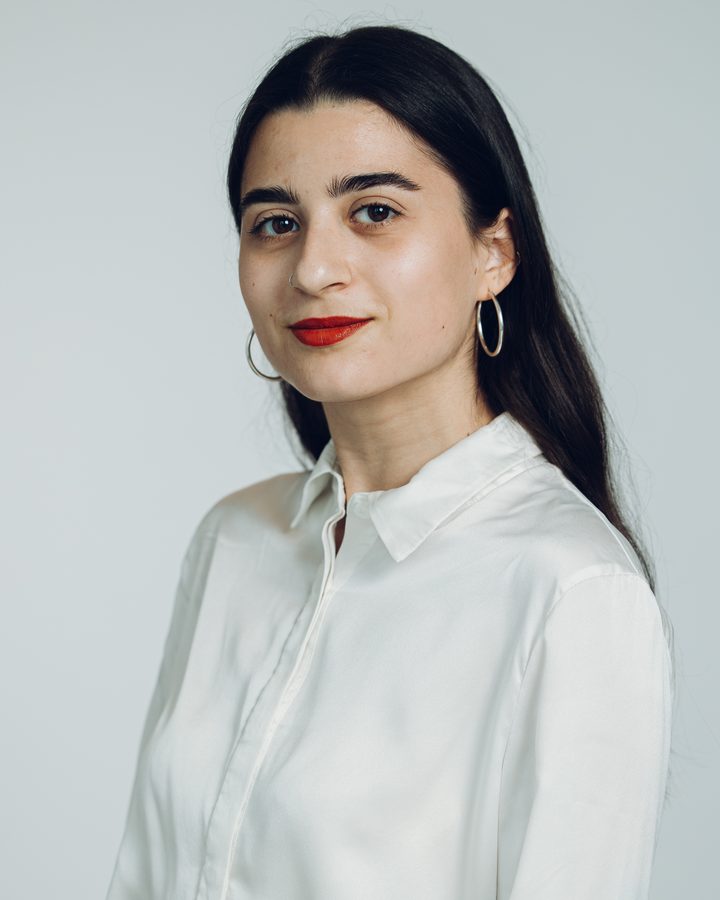
A small, deliberately chosen core team and a network of specialist partner studios. Sometimes the truth has teeth — we would rather use it to build something stronger than dress it up again.


We write the argument down before we sell it.
Longer-form writing on operating models, accountability and the unglamorous plumbing beneath credible impact. If you want to know how we think before you brief us, start here.
The Mandate–Responsibility Mismatch
Holding people accountable for outcomes they have no authority to shape is not empowerment.
Impact Stories Aren't Soft. They're Strategic.
Treating impact stories as a feel-good extra is a mistake. They are an instrument.
On Paper, You're Perfect.
How organisations can be fully compliant, highly efficient, and still be shockingly ineffective.
Two ways to work with us.
You have a brief, a budget and a closing date.
Funds, foundations, INGOs and delivery partners commissioning strategy, research or training. We work as prime or in consortium, we read the ToR properly, and we answer the evaluation criteria in the order you wrote them.
Send us the brief →The organisation has scaled. The architecture has not.
More programmes, more funders, more reporting — and a widening gap between what you promise and what actually gets decided. Start on the model side: the free Readiness Scan takes ten minutes and names the layer giving way first.
Go to the Operating Model →